Understanding Spanish Waste Rules is not the most glamorous part of living in Spain, but it’s one of those grown-up missions that keeps your street from smelling like August at 3 p.m. Spain takes recycling seriously—so seriously that there are regulations, colour-coded bins, municipal bylaws, and even a special waste tax in Spain to encourage proper disposal.
Let’s break it down clearly, practically, and with enough wit to keep your brain awake.
The EU keeps pushing member states toward stricter recycling targets. Spain, determined not to be “that kid” who forgets the homework, keeps refining its waste management laws. Municipalities now enforce clearer bins, more fines, and improved recycling systems.
The result? If you follow the rules, life is smooth. If you don’t—you may meet the legendary Spanish administrative fine. And no one has the courage to face that without coffee.
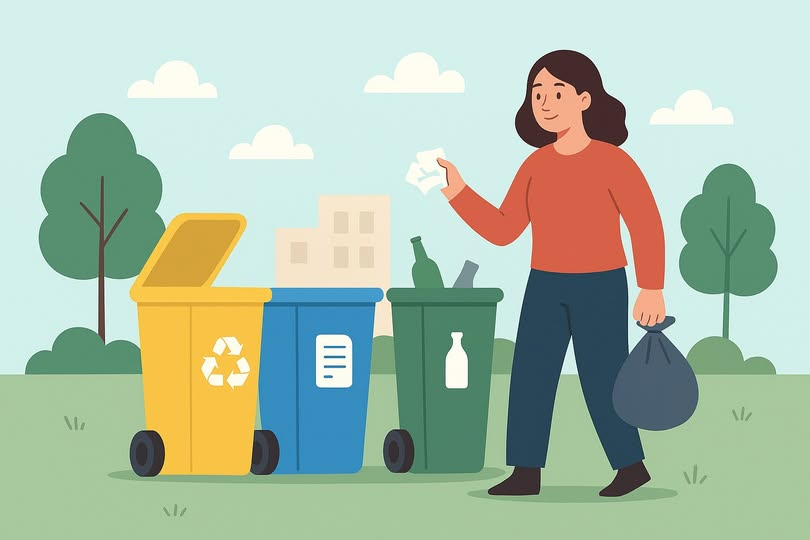
The Main Bins: What Goes Where (Spain Recycling Regulations in Real Life)
Spain’s bins follow a simple logic—learn it once, and you’re basically fluent in domestic sustainability.
🟡 Yellow Bin — Packaging & Plastics
Plastic bottles
Cans
Cartons (yes, that juice carton counts)
Plastic wrapping
Avoid: toys, hoses, frying pans. Nobody wants to meet the municipal worker who finds a garden gnome in there.
🔵 Blue Bin — Paper & Cardboard
Newspapers
Boxes
Magazines
Clean paper bags
Avoid: used pizza boxes—grease breaks the recycling chain faster than tourist traffic.
🟢 Green Bin — Glass
Glass bottles
Jars
Containers
Avoid: ceramics, mirrors, porcelain. The bin may be green, but it’s not magic.
🟤 Brown Bin — Organic Waste
Available in more and more cities.
Food scraps
Coffee grounds
Tea bags
Vegetable peels
Avoid: plastic, metal, false optimism.
⚫ Grey/Black Bin — General Waste
Whatever doesn’t belong in the other categories—your last resort option.
Bulky Items: Spanish Waste Rules for “Big Stuff”
Spain is strict about where and how large objects are dumped. The typical process:
Book a collection with the town hall
Leave items outside only on the assigned day
Or bring them to a punto limpio (eco-park)
Dumping a sofa at midnight like a recycling ninja is one of the fastest roads to a fine.
The New Waste Tax in Spain (Impuesto al Plástico / Waste Fee)
Spain introduced an EU-aligned measure known popularly as the waste tax in Spain, which affects:
Non-reusable plastic packaging
Commercial production of plastic products
Importers and companies distributing plastic-packaged goods
For residents, it mostly appears indirectly—higher costs for certain packaged items and stricter recycling controls. Combined with municipal waste fees, it’s Spain’s gentle way of saying:
“Recycle properly or the invoice arrives.”
The rubbish tax kicks in the moment the bin lorry officially starts visiting your home or business. If your place is still a construction zone or somewhere the service doesn’t even exist yet, congratulations — you’re off the hook, no matter what the council usually demands.
Each council sets its own rules, calendar, and level of confusion. Your first payment usually covers the months from when you move in or open shop. After that, it’s a yearly ritual on whatever date the council chooses (usually written somewhere nobody reads).
And yes — deadlines vary wildly. Barcelona wants it paid between 1 May and 30 June. Madrid prefers 1 October to 30 November. Because why make it simple when you can make it Spanish?
Spanish Waste Rules: Rubbish Collection Rules Vary by Municipality
Every town adds its own flavour to waste regulations. Common additions include:
Set times when rubbish bags may be left out
Mandatory organic waste separation
Local bans on leaving bins open
Special holiday collection schedules
To avoid surprises, check your Ayuntamiento’s website. Or ask a neighbour—they’ll give you the rules plus the neighbourhood gossip for free.
How to Recycle in Spain: Quick Survival Checklist
Learn the bin colours—your future self will thank you.
Never mix glass with general waste.
Keep cardboard clean and flattened.
Use puntos limpios for electronics, furniture, paint, etc.
Respect collection times (Spain loves schedules almost as much as fiestas).
Remember the Spanish waste rules apply nationwide, but fines and procedures differ locally.
Keep an eye on updates—the system is evolving as Spain aims for top EU sustainability scores.
Final Thoughts
Mastering Spanish Waste Rules isn’t just about avoiding fines—it’s about fitting into Spain’s rhythm, where community, responsibility, and a cleaner future all matter. Once you get used to the system, sorting rubbish becomes as natural as ordering a cortado.

 79
79
 35
35
 20
20











3 Comments