Spain sells you sun, beaches, and sangría — not the part where six-legged night ninjas sometimes join the fiesta. But here we are: Cockroaches in Spain! And if you thought the bedbug saga of 2023 was peak horror, Spain has quietly levelled up.
Common Cockroach Species in Spain (AKA: The Uninvited Roommates You Never Asked For)
Spain has three main cockroach species, each with its own… special way of ruining your day. Think of them as the “Three Musketeers,” except they bring bacteria instead of heroism.
1. Blattella germanica — The German Cockroach
The superstar of Spanish kitchens. If there were a roach Olympics, this one would win “Most Annoying Indoor Pest” every year.
Size: 13–16 mm — small enough to hide everywhere, big enough to ruin your appetite.
Look: Light brown with two dark racing stripes like it’s about to start a Formula 1 career.
Lifestyle: Loves warmth, moisture, and your appliances. They practically Airbnb behind your fridge, under your sink, and inside anything with a plug.
If you spot one, assume it has 200 cousins already picking out rooms.
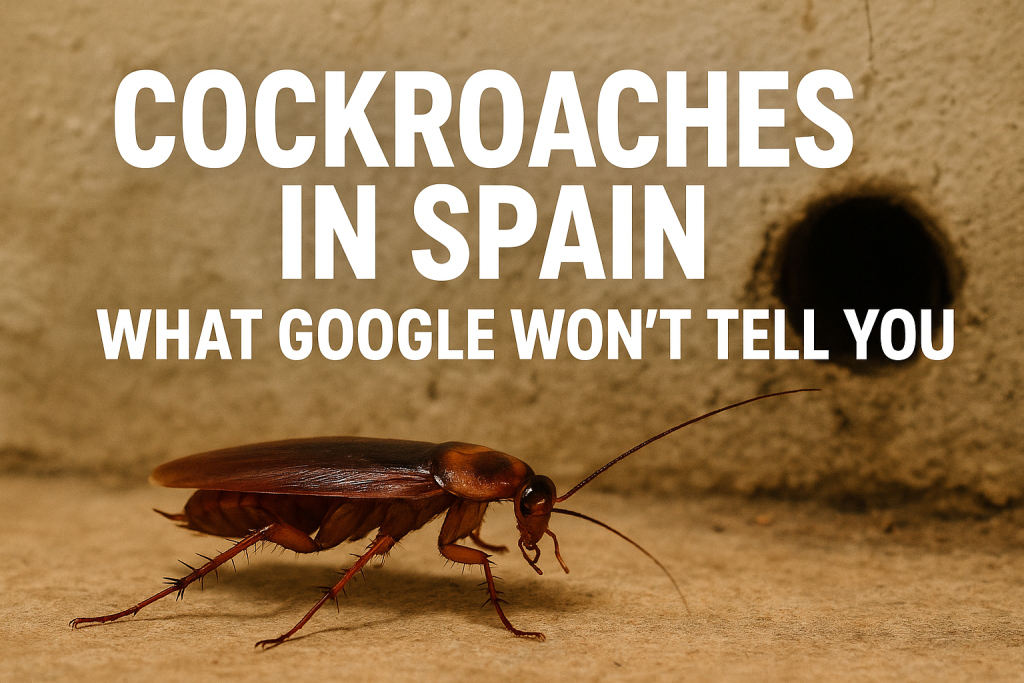
2. Periplaneta americana — The American Cockroach
A giant, shiny, reddish-brown nightmare. Despite the name, Spain hosts plenty of them — lucky us.
Size: Up to 40 mm — yes, that’s the “Nope, I’m moving out” size.
Look: Shiny body with a yellowish halo behind the head, as if they think they’re angelic.
Behavior: Slower than the others, but still fast enough to give you a heart attack if you meet one at midnight.
Less common, but when they do show up, they bring a vibe.
The Creepy Plot Twist: Mutant Cockroaches Are Here
Environmental health experts at Anecpla have been sounding the alarm: rising temperatures have created genetically tougher cockroaches — the kind that look at weak biocides and go: “Is that perfume?”
According to Anecpla’s director Jorge Galván, once temperatures hit 28°C, cockroaches reproduce faster than a Netflix auto-play. Spring now feels like summer, summer feels like lava, and autumn politely refuses to cool down — perfect breeding ground for cockroach armies.
Worse? The EU’s strict chemical rules mean many older pest-control products are useless, and roaches have evolved resistance like mini Terminators. Stronger products exist, but they’re regulated and used only when absolutely necessary.
And yes — they can spread bacteria and disease. Cute.
Cockroaches in Spain:What Google Won’t Tell You (But You Should Know Before You Sleep Tonight)
1. Cockroaches in Spain Aren’t Just Common — They’re Seasonal Athletes:
From April to October, expect them to train for the Olympics. Coastal regions like Valencia, Alicante, Malaga, Barcelona, and the islands? Prime roach real estate.
2. They Don’t Come for Dirt — They Come for Climate
Even spotless homes can get visitors. Warm pipes, humidity, and gaps in Spanish building structures? Delicious.
Locals will tell you: – Old town areas = higher risk – Lower floors = roach red carpet – Drains = express elevator to your kitchen
4. Municipal Drains Are the Secret Highway
Roaches use city drainage systems like a metro network. Bars, restaurants, apartment blocks — all connected. That’s why infestations often appear “out of nowhere.”
⭐ How to Get Rid of Cockroaches in Spain (for real — not Google-fantasy level advice)
1. Block the “Spanish Gaps”
Most Spanish homes have charming architectural ventilation slits that cockroaches treat like VIP entrances. Seal:
Pipe entry points
Under-sink gaps
Loose tiles
Ventilation grilles (with mesh)
2. Attack Their Water Source
Cockroaches in Spain love humidity more than Brits love Benidorm. Fix:
3. Use the Right Baits (Not the Random Supermarket Ones)
Most cheap supermarket gels? Cockroach candy. Spanish pest control pros recommend:
Gel cebos profesionales (used by exterminators)
Rotating active ingredients every few months
Applying them inside drains and wall voids
4. Don’t Rely on Sprays — They Just Scatter Them
Sprays are the worst home strategy: they make roaches hide deeper and multiply.
5. Clean… but Smart Clean
Our advice is gold:
Zero crumbs
Zero overnight dishes
Zero open rubbish
Tight lids
Vacuum behind appliances once a week (their Airbnb)
6. Restaurants & Bars: Seal Everything
If you run a business:
Seal cracks
Inspect drains weekly
Log all sightings
Professional monthly treatments in warm regions Tourist season = roach season.
7. When to Call a Professional
Call in a pro when:
You see more than 2–3 per week
They appear in daylight
They appear on higher floors
You smell a “musty sweet” odor (yes, that’s them)
Spain’s cockroach strains are too adapted for DIY heroism.
What Cockroaches Reveal About a Property (And Why Buyers Should Pay Attention)
Seeing cockroaches in Spain is not always just a hygiene issue. In many cases, it’s a signal that something deeper is wrong with the property itself.
Experienced property inspectors and renovation supervisors know that recurring cockroach problems often appear when there are hidden structural conditions that create the perfect environment for them.
These may include:
Hidden humidity problems Old Spanish buildings often have moisture trapped inside walls, kitchens, or bathrooms. Cockroaches thrive in damp micro-spaces that owners rarely see.
Unsealed pipe shafts and construction gaps In many apartment blocks, pipes run through vertical shafts connecting multiple floors. If these openings are poorly sealed, cockroaches move freely between apartments.
Poorly renovated kitchens and bathrooms Low-quality renovations often leave gaps behind cabinets, under tiles, or around plumbing — ideal cockroach highways.
Old drainage systems In coastal cities like Torrevieja, Alicante, or Valencia, older drainage systems sometimes allow insects to enter buildings through pipes.
In other words, cockroaches are sometimes a symptom, not the root problem.
Why Property Buyers in Spain Should Take This Seriously
If you are buying property in Spain — especially in older buildings — cockroach presence can indicate issues that may later require unexpected renovation costs.
Professional property inspection can reveal:
hidden humidity zones
poor ventilation behind walls
plumbing shaft openings
construction gaps from past renovations
sanitation risks inside kitchens and bathrooms
Identifying these problems before buying or renovating can save thousands of euros later.
Buy Safe. Renovate Smart. Live Easy.
At KWICO, our philosophy is simple:
A comfortable home in Spain starts with transparency and professional oversight.
That’s why our services combine three essential stages:

 79
79
 35
35
 20
20











One Comment