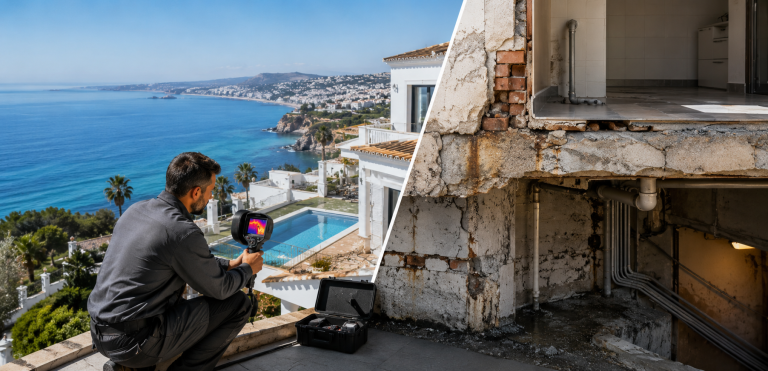
Renovating in Spain—especially on the Costa Blanca—should feel like upgrading your lifestyle, not auditioning for a courtroom drama. Sun, terraces, sea views… and then suddenly: missing permits, disappearing builders, and invoices that multiply faster than tapas on a Friday night. Her we go: Renovation Red Flags in Spain!
In fact, most renovation disasters in Spain are predictable—and preventable. The trick is spotting the red flags early and acting before your “dream home” becomes a legal and financial puzzle.
🚩 Red Flag #1: Vague Contracts (or “We’ll Sort It Later” Syndrome)
If your builder hands you a contract that’s missing timelines, detailed scope, payment stages, or—classic Spanish twist—“ya veremos” (“we’ll see”), you’re already exposed.
In Spain, contracts must clearly define:
Scope of work (down to materials)
Timeline with milestones
Payment structure tied to progress
Responsibility for permits (licencia de obra)
Why it matters on Costa Blanca: Many properties (especially older villas or resales) already have irregularities. A weak contract means you could end up paying for work that isn’t even legally compliant.
Smart move: Get a property inspection + legal review before signing anything. It’s cheaper than fixing a mistake later—by a factor of “ouch.”
🚩 Red Flag #2: Communication Goes Quiet (The “Ghost Builder” Effect)
At first, everything feels smooth. Quick replies, big promises, confident timelines.
Then suddenly:
Calls go unanswered
Messages take days (or weeks)
Site visits become “next week for sure”
This isn’t just annoying—it’s usually the first crack in the system.
Costa Blanca reality check: Many contractors juggle multiple projects across Alicante, Torrevieja, Orihuela Costa… and guess what? The loudest client gets priority.
Smart move: Track communication from day one. If things slow down early, step in immediately with independent oversight before your project slides down the priority list.
🚩 Red Flag #3: “Just One More Payment…” (Before Work is Done)
Deposits are normal in Spain. But if your contractor:
Asks for large upfront payments
Requests extra funds without clear justification
Keeps moving the financial goalposts
…it’s a warning sign.
What’s really happening? You might be financing their other projects.
Smart move:
Tie every payment to verified progress
Require written change orders
Never pay for work you can’t physically see or verify
Think of it like this: if the tiles aren’t on the wall, your money shouldn’t be gone either.
…it usually means your project has been deprioritized.
Why this happens in Spain: Contractors often overbook, especially in high-demand areas like Alicante and Torrevieja. When cash flow tightens, they shift resources elsewhere.
Smart move:
Keep a weekly progress log (photos/videos)
Set clear milestones
Bring in independent inspection and control early
Momentum is everything. Once it’s lost, timelines—and budgets—start drifting.
⚠️ The Biggest Mistake: Waiting Too Long
Most people ask for help when:
The builder disappears
The budget is blown
Legal issues are already in motion
At that point, fixing the problem is possible—but expensive, slow, and stressful.
The smarter approach? Act at the first red flag, not the fifth.
🏡 The Costa Blanca Advantage: Control From Day One
A modern approach to renovation in Spain isn’t just about building—it’s about protecting your investment from the start.
In other words: no surprises, no guesswork, no “we’ll fix it later.”
🚀 Renovation Red Flags in Spain: Final Thought
Renovating in Spain can be one of the best decisions you make—if you stay in control. Ignore the red flags, and your villa upgrade might turn into a masterclass in Spanish bureaucracy. Spot them early, act fast, and you’ll keep your project where it belongs: on track, on budget… and far away from legal nightmares.

 79
79
 35
35
 20
20