Buying property in Spain can be one of the best lifestyle and investment decisions you ever make. But without the right checks, it can also become a costly mistake. Property scams in Spain happen every year, affecting foreign buyers who rely on incomplete information, rushed decisions, or unverified sellers.
The good news? Most real estate scams in Spain are completely avoidable if you follow a structured, professional verification process before signing anything.
This guide explains how to avoid property scams in Spain, the most common fraud schemes targeting buyers, and the smart verification steps that protect your investment.
Why Property Scams Still Happen in Spain
Spain has a well-developed legal system and property registry. Yet scams still occur because many buyers:
Trust agents or sellers without independent verification
Foreign buyers are particularly vulnerable because they are unfamiliar with the system.
A beautiful apartment near the Mediterranean can feel like a dream. But if legal, technical, or financial risks are hidden, that dream can quickly turn into a very expensive lesson.
The Most Common Property Scams in Spain
Understanding the typical schemes is the first step to avoiding them.
1. Fake Property Listings
Some scammers advertise properties that:
Do not exist
Are already sold
Are owned by someone else
The goal is usually to collect a reservation deposit from multiple buyers before disappearing.
Red flag: The seller pushes for a quick deposit before a visit or legal verification.
2. Selling Property Without Legal Ownership
In rare but serious cases, someone tries to sell property without being the registered owner.
Without checking the official property registry, buyers may not realize the problem until much later.
This is why verifying the title deed and ownership records is essential before signing any agreement.
3. Hidden Debts Attached to the Property
In Spain, certain debts can follow the property itself.
Examples include:
Community fees
Local property taxes (IBI)
Utility debts
Outstanding mortgages
Legal claims
If these are not discovered during due diligence, the new owner may inherit them.
4. Illegal Renovations and Building Violations
Many Spanish homes — especially in coastal areas — have undergone renovations that were never officially registered.
The trend is clear: safe buying is becoming a structured process, not a leap of faith.
Frequently Asked Questions
Is it safe for foreigners to buy property in Spain?
Yes. Spain has a strong legal system and property registry. However, buyers should always perform proper legal and technical checks to avoid risks.
What is the biggest property scam risk in Spain?
The most common risks include fake listings, hidden debts, illegal renovations, and rushed reservation deposits without proper verification.
Should I inspect a property before buying in Spain?
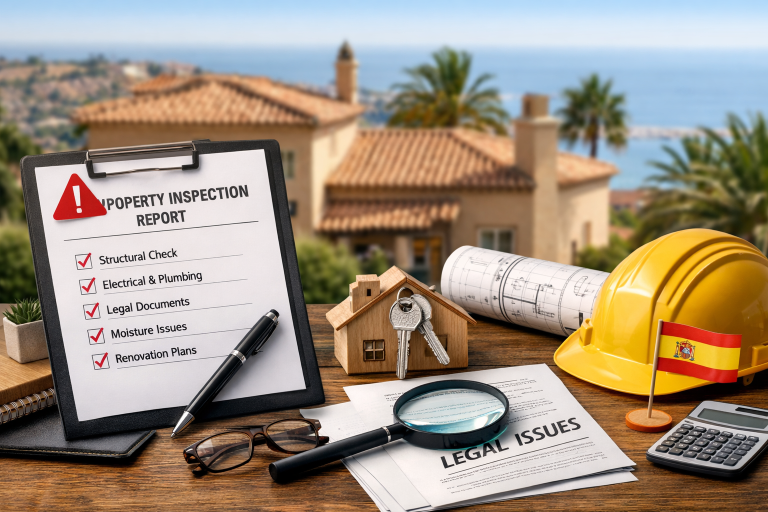
Absolutely. A professional inspection can reveal structural issues, humidity problems, and unregistered renovations that are not visible during normal visits.
Can property debts transfer to the new owner?
Yes, certain debts such as community fees or local taxes can remain attached to the property if they are not cleared before the sale.
Spain remains one of the most attractive property markets in Europe. But smart buyers understand one key principle:
A beautiful property is not always a safe property.
Taking the time to verify legal status, construction quality, and financial history ensures your purchase becomes a successful investment — not a costly surprise.
Buying safe is not about fear. It’s about making informed decisions before signing the contract.

 79
79
 35
35 20
20