
Installing laminate flooring can transform a space instantly—if you do it right. But even premium panels will betray you with creaks, gaps, and ugly buckling if the basics are ignored. The truth is simple: most homeowners struggle not because the material is bad, but because they don’t know how to install laminate flooring correctly to avoid long-term problems. Flooring experts break down the exact reasons laminate fails—and the proven installation method that keeps your floor smooth, silent, and perfectly aligned for years.
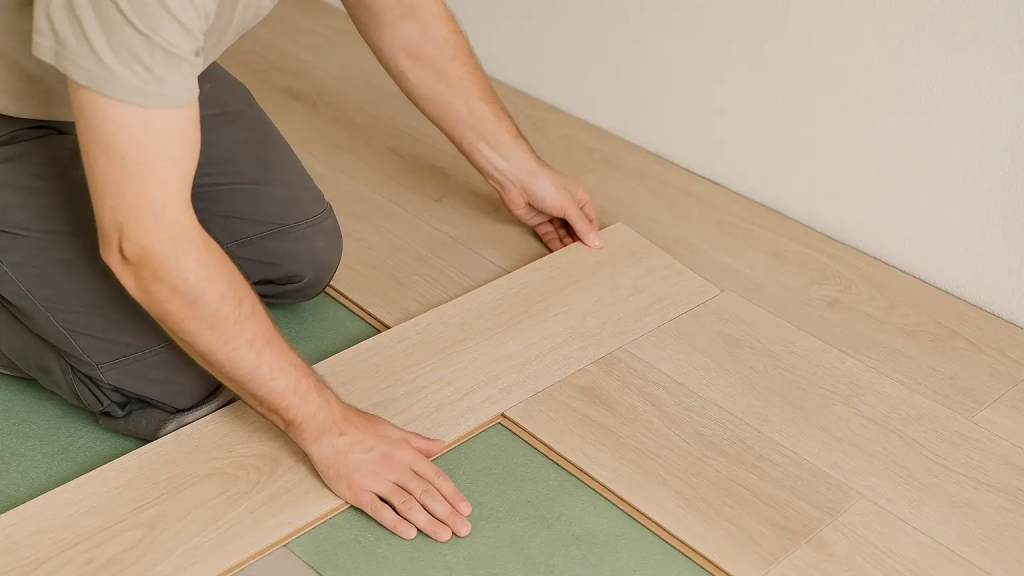
To help you avoid these headaches, flooring specialists explain the exact reasons laminate fails—and the installation method that works 100% of the time when followed properly.
How to Install Laminate Flooring Correctly: Why Laminate Starts to Creak or Buckle
According to flooring installation expert Sergey Melnikov, most laminate problems don’t come from the material itself but from mistakes during installation.
Here are the usual culprits:
1. Uneven Subfloor
Just a 2–3 mm dip is enough to make laminate “float” unevenly. Walking over these spots creates pressure, friction, and—voilà—creaks.
2. No Expansion Gap
Laminate is a “floating” material. It expands and contracts depending on humidity and temperature.
If there’s no gap between the flooring and walls (8–12 mm), the panels hit the wall and rise, causing the dreaded buckling.
This is the flooring equivalent of wearing shoes one size too small—you will feel it.
3. Wrong Underlayment
Too soft? Too thick? Wrong type?
A mismatched underlayment instantly creates bounce, unstable joints, and noise.
4. Moisture Problems
Water is laminate’s arch-enemy. Poor vapor barrier, leaks, or installing laminate in high-humidity areas without proper protection all lead to deformation.
5. No Acclimatization
If panels are installed straight after delivery, they may shift later as they “settle” into the room’s climate—causing gaps and misalignment.

How to Prevent Gaps Between Laminate Panels
Gaps usually appear due to temperature changes or careless handling during installation.
To avoid this:
1. Let Panels Acclimate for 48 Hours
Store them in the installation room.
Let them adapt like guests adjusting to your house rules.
2. Check the Locking Mechanism
A proper lock should click firmly with no looseness.
If you have to use brute force—stop. Something is wrong with the alignment, not your muscles.
3. Clean the Joints Before Connecting
Dust or debris inside the locking groove weakens the connection.
4. Never Walk on the Floor Before a Section is Complete
As Sergey Melnikov notes, one of the most common reasons for gaps is stepping on panels that aren’t locked in place yet.
A floating floor is not a trampoline—respect the process.
How to Install Laminate Flooring Correctly – Where Squeaks Come From and How to Avoid Them
Squeaks occur when the subfloor or underlayment doesn’t support the laminate evenly.
1. Level the Subfloor (Non-Negociable)
Use self-leveling compound to achieve a perfectly smooth base.
This step takes time but saves you from months of creaky regret.
2. Choose the Right Underlayment
Match the material to:
- laminate thickness
- subfloor type (concrete vs. wood)
- sound insulation requirements
Too soft = movement
Too hard = impact noise
Wrong choice = problems forever
3. Keep It Clean
Even tiny debris under the underlayment can create micro-movements—yes, even a rogue grain of sand can be the villain of your future horror story called The Floor That Never Stopped Creaking.
The Essential Checklist for Perfect Laminate Installation
✔ Level the Subfloor
No bumps, dips, cracks, or uneven waves.
✔ Add Moisture Protection
Especially over concrete or in kitchens, hallways, and ground floors.
✔ Use the Right Underlayment
Consult the manufacturer’s recommendations—this is chemistry, not guesswork.
✔ Leave an Expansion Gap
8–12 mm along all walls, pipes, and fixed structures.
✔ Acclimate the Panels
48 hours minimum.
✔ Install Carefully
Click-locks must snap cleanly without force.
✔ Avoid Walking on Unfinished Sections
Let the floor settle and lock properly.
✔ Don’t Save Money on Materials
Cheap laminate = weak locking system = short lifespan.
How to install laminate flooring correctly : Final Thoughts – A Floor That Stays Beautiful for Years
Installing laminate correctly is not complicated—but it demands precision, patience, and attention to the small things that most people overlook.
Follow the proven method above, and you’ll have a floor that:
- looks great
- stays silent
- resists moisture and deformation
- maintains tight joints
- lasts for many years
No creaks, no gaps, no buckling. Just a reliable, quiet, durable surface—exactly the way laminate was meant to be.
 79
79
 35
35
 20
20









3 Comments