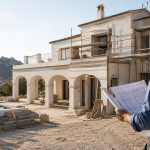
Selling a property on the Costa Blanca raises a common question. Is a Property Energy Audit Before Sale required before we sell, and can it help secure a better price?
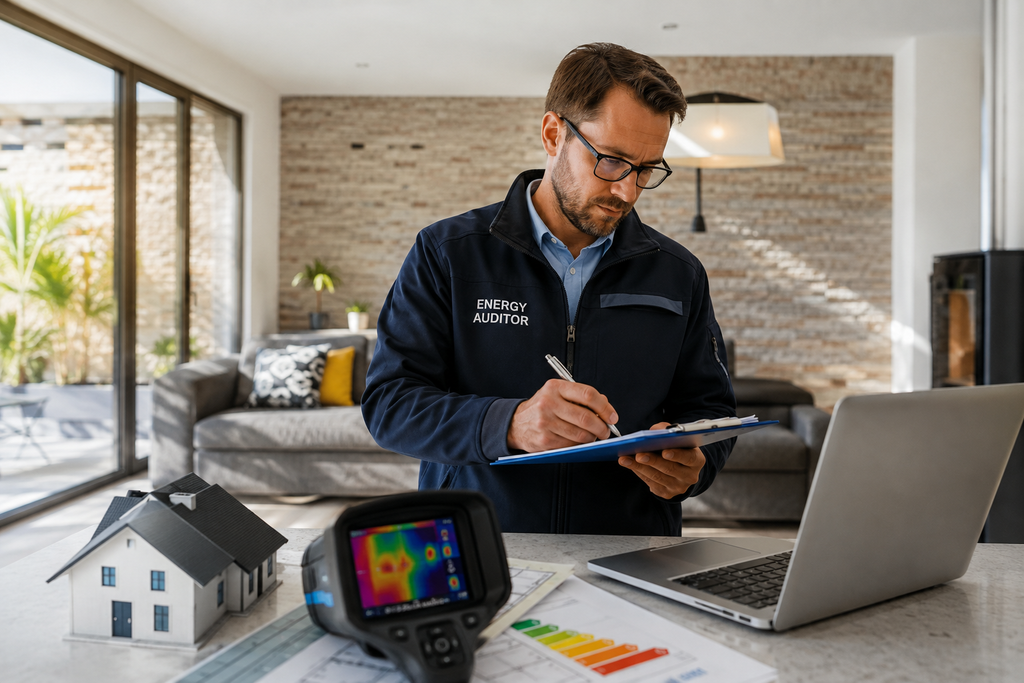
Short answer: yes, it can. Moreover, a Property Energy Audit Before Sale can reveal where your property is wasting energy. It shows what buyers notice during an inspection. It indicates which upgrades are worth doing before listing. Money could then be saved and you avoid missed revenue.
And no, it doesn’t mean installing €30,000 of solar panels just because your neighbour has them.
A smart property energy audit before sale is about knowing exactly what you are selling — and fixing the expensive little surprises before the buyer discovers them.
What Is a Property Energy Audit Before Sale?
A property energy audit is a professional assessment.
Property Energy Audit Before Sale assesses how efficiently a home uses energy.
It looks beyond the obvious question of whether the air conditioning works.
A proper audit can examine:
- Heating and cooling efficiency
- Air conditioning performance
- Insulation
- Windows and doors
- Solar exposure
- Hot-water systems
- Electricity consumption
- Ventilation
- Roof and wall heat loss
- Potential solar energy improvements
- Battery-storage opportunities
- Energy-related maintenance issues
The objective is simple:
Find the property’s energy weaknesses before the buyer, their surveyor or their agent does.
That puts the seller in control.
Why Should You Get an Energy Audit Before Selling?
Because modern buyers are increasingly interested in running costs, not just marble floors and swimming pools.
A beautiful villa that costs €300 a month to keep comfortable can suddenly look less beautiful when compared with a similar property costing €120.
Energy performance can influence:
- Buyer confidence
- Negotiation power
- Property appeal
- Expected running costs
- Future renovation decisions
- The perceived quality of the property
On the Costa Blanca, this matters particularly because cooling costs can become significant during long, hot summers.
A buyer isn’t just purchasing four walls.
They’re buying the future electricity bills too.
Energy Audit vs Energy Certificate: They Are Not the Same Thing
This is where many property owners get confused.
An Energy Performance Certificate (EPC) or Spanish Certificate de efficiency Energética provides an official energy-efficiency rating for the property and is part of the legal process involved in selling or renting a property.
An energy audit, however, is much more practical.
The certificate tells you, broadly, where the property sits on the energy-efficiency scale.
An audit helps answer:
Why is the property performing this way — and what can I realistically do about it?
That distinction is important.
You can have a perfectly valid energy certificate while still having a home with poor insulation, inefficient cooling, excessive solar heat gain or unnecessarily high electricity consumption.
What Does a Property Energy Audit Check?
1. Air Conditioning and Cooling
On the Costa Blanca, cooling isn’t a luxury. For many homes, it’s a survival strategy with a remote control.
An audit can assess whether:
- AC units are appropriately sized
- Older systems are consuming excessive electricity
- Filters and units require maintenance
- Inverter systems are operating efficiently
- Different zones are being cooled unnecessarily
- Replacement would provide a meaningful return
Sometimes the solution isn’t a new air conditioner.
Sometimes it’s simply stopping the house from behaving like a greenhouse.
2. Insulation and Heat Loss
Poor insulation can make a property difficult and expensive to heat or cool.
The audit can identify potential weaknesses around:
- Roofs
- External walls
- Windows
- Doors
- Roller shutters
- Thermal bridges
- Attic spaces
This is particularly useful when deciding whether insulation improvements should be completed before putting the property on the market.
3. Windows and Glazing
Large Mediterranean windows look fantastic.
They can also invite the Spanish sun inside with the enthusiasm of a nightclub bouncer.
An assessment can consider:
- Double glazing
- Low-emissivity glass
- Solar-control glazing
- Frame quality
- Air leakage
- External shading
- Orientation
In some properties, improving solar control can produce more noticeable comfort benefits than expensive cosmetic renovation.
4. Solar Potential
A property energy audit can also identify whether the home is suitable for:
- Rooftop solar
- Battery storage
- Solar pergolas
- EV charging
- Hybrid energy systems
- Other smart-energy upgrades
But here’s the important part:
Solar should be recommended because the numbers make sense — not because solar panels look impressive in a brochure.
A good assessment should consider consumption, roof orientation, available space, shading and the property’s likely future use.
Should You Upgrade the Property Before Selling?
Not necessarily.
This is one of the biggest mistakes sellers make.
They spend €20,000 upgrading a property and assume they’ll automatically recover €20,000 in the sale price.
Property doesn’t work quite that politely.
Instead, consider the return on investment of each improvement.
High-value improvements may include:
- Fixing obvious energy inefficiencies
- Improving insulation where heat loss is significant
- Replacing failing or extremely inefficient AC equipment
- Improving windows where thermal performance is poor
- Installing smart controls
- Addressing water-heating inefficiencies
- Adding solar where the financial case is strong
Lower-priority improvements may include:
- Expensive systems with little payback
- Technology buyers won’t value
- Upgrades that are difficult to explain or demonstrate
- Projects unlikely to influence the property’s market position
The goal isn’t to create the most technologically advanced house on the street.
It’s to create a property that makes financial sense to the next owner.
Can an Energy Audit Help During Price Negotiations?
Absolutely — especially when the information is presented properly.
Imagine a buyer says:
“The house is going to cost a fortune to run.”
Without evidence, you’re negotiating emotionally.
With an audit, you can show:
- Current weaknesses
- Estimated energy consumption
- Recommended improvements
- Potential savings
- Existing efficient systems
- Solar potential
- Priority repairs
That changes the conversation from:
“I think the house is efficient.”
to:
“Here is what has actually been assessed.”
That is a much stronger selling position.
Energy Audit Before Sale on the Costa Blanca
For properties around Torrevieja, Orihuela Costa, Guardamar, Santa Pola, Elche, Alicante, Benidorm and the wider Costa Blanca, energy performance can be particularly relevant because properties often face intense solar exposure and long cooling seasons.
Holiday homes and second residences deserve special attention.
A property that sits empty for months may have different energy requirements from a permanently occupied family home.
And buyers increasingly want to understand not just:
“What does this villa cost?”
but:
“What will this villa cost me to own?”
That’s the question sellers should answer before the buyer asks it.
What Should You Do Before Listing Your Property?
A practical pre-sale energy strategy can look like this:
Step 1 — Inspect
Identify obvious energy weaknesses and technical issues.
Step 2 — Measure
Look at consumption, equipment and the property’s physical characteristics.
Step 3 — Prioritise
Separate must-fix problems from nice-to-have upgrades.
Step 4 — Calculate
Estimate the likely cost and potential benefit of improvements.
Step 5 — Upgrade Selectively
Only invest where the improvement makes commercial sense.
Step 6 — Document Everything
Keep reports, invoices, specifications and technical information.
Step 7 — Sell the Improvement
Don’t simply say:
“The house has solar.”
Say what that actually means for the buyer.
Why an Independent Energy Assessment Can Be Valuable
If the same person selling you a €20,000 upgrade is also telling you that you desperately need that upgrade…
Well, let’s just say it’s useful to have a second pair of eyes.
An independent property energy audit can help homeowners make decisions based on the property rather than a contractor’s sales target.
At KwiCo, the broader approach is to look at the property as a system — energy, climate, insulation, equipment, solar potential and practical improvement priorities — rather than treating every problem as an excuse to sell another shiny gadget.
Because sometimes the best upgrade is a €500 improvement.
Sometimes it’s €10,000.
And occasionally the correct professional recommendation is:
“Don’t spend the money. It won’t pay back.”
That’s useful information too.
What About Energy Improvements After the Sale?
An audit can also become a roadmap for the new owner.
Instead of handing over a house with a vague promise that “everything works,” the seller can provide a clearer picture of:
- Current energy performance
- Existing equipment
- Recommended improvements
- Potential solar installation
- Insulation opportunities
- Future maintenance priorities
That can make the property easier to understand — particularly for international buyers purchasing a home in Spain from abroad.
Property Energy Audit Before Sale: The Bottom Line
Should you get a property energy audit before selling?
If you’re selling an average apartment, it may not always be essential.
If you’re selling a villa, detached house, large property, second home, older building or energy-intensive property, it can be a very smart move.
The biggest advantage isn’t necessarily making the house more efficient.
It’s knowing what you’ve got before someone else starts negotiating against it.
A property audit can uncover problems while they’re still your decision, rather than after the buyer has discovered them and turned them into a discount.
And that is the golden rule of selling property:
Fix problems on your terms — not at the buyer’s negotiating price.
Thinking of Selling Your Costa Blanca Property?
Before spending thousands on renovations, solar, insulation or new equipment, get the property assessed first.
KwiCo can help with independent property inspections, energy audits, insulation assessments, solar potential analysis and practical property improvement planning across the Costa Blanca.
Know the numbers. Fix what matters. Sell with confidence.
 79
79
 35
35
 20
20