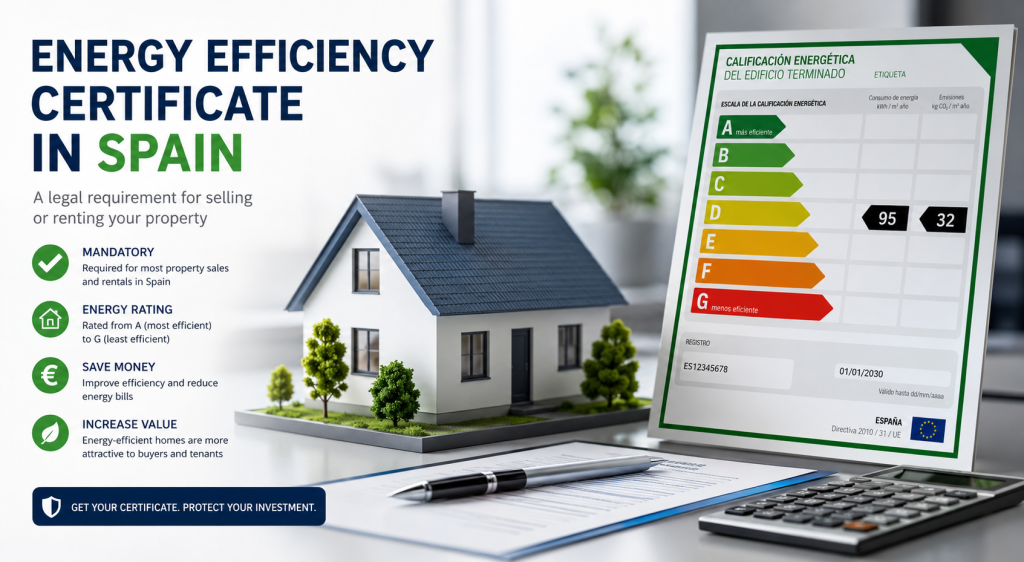
An Energy Efficiency Certificate (Certificado de Eficiencia Energética or EPC) is a legally required document in Spain for most properties being sold or rented. It measures how energy-efficient a property is, assigns an energy rating from A (most efficient) to G (least efficient), and helps buyers and tenants understand future energy consumption and utility costs. Without a valid certificate, property owners can face fines and complications during property transactions.
Whether you are selling a villa, renting an apartment, buying a holiday home, or investing in Costa Blanca real estate, obtaining an Energy Efficiency Certificate is one of the essential steps in the process.
What Is an Energy Efficiency Certificate?
An Energy Efficiency Certificate is an official report prepared by a qualified technician who evaluates how efficiently a property uses energy.
The certificate assesses factors such as:
- Insulation quality
- Wall construction
- Roof condition
- Window performance
- Air conditioning systems
- Heating systems
- Hot water production
- Solar energy installations
- Property orientation and sunlight exposure
The result is a rating from A to G:
| Rating | Energy Performance |
|---|---|
| A | Excellent |
| B | Very Efficient |
| C | Good |
| D | Average |
| E | Below Average |
| F | Poor |
| G | Very Poor |
Properties with higher ratings generally have lower energy bills and greater market appeal.
Is an Energy Efficiency Certificate Mandatory in Spain?
Yes.
Spanish law requires a valid Energy Efficiency Certificate for most property sales and rentals.
You typically need one if you are:
- Selling a property
- Renting a property long-term
- Advertising a property for sale
- Advertising a property for rent
The energy rating must often appear in property listings and marketing materials.
Why Is the Certificate Important for Buyers?
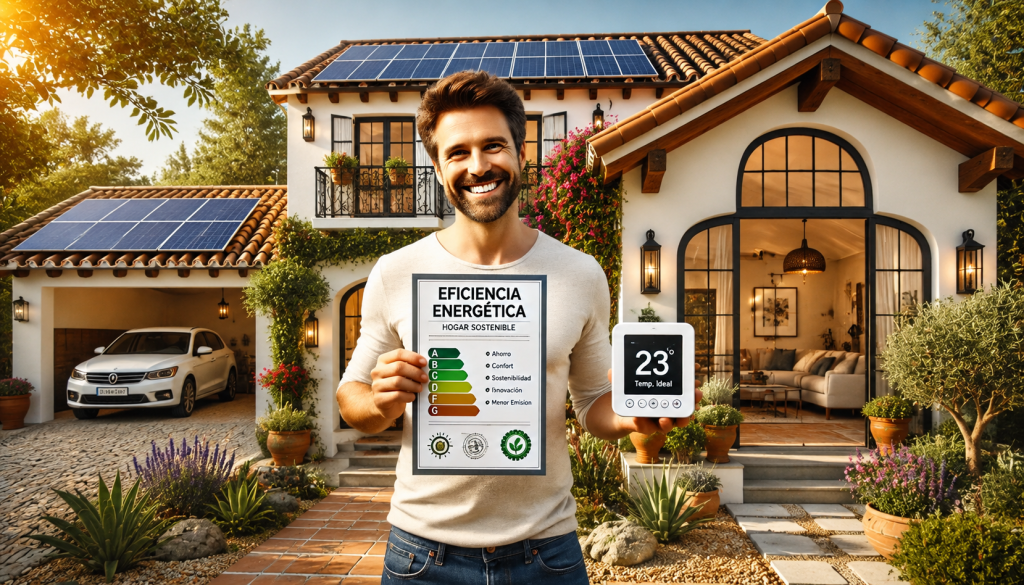
Many buyers focus on location, size, and price while overlooking long-term running costs.
An Energy Efficiency Certificate provides valuable insight into:
Future Energy Bills
A property with poor insulation may require significantly more cooling during hot Costa Blanca summers.
Hidden Building Issues
Low ratings can sometimes indicate:
- Poor insulation
- Aging windows
- Inefficient air conditioning systems
- Heat loss problems
- Moisture-related construction defects
Potential Renovation Costs
Understanding energy performance before purchase helps buyers budget for future improvements.
Why Property Investors Should Pay Attention
Energy efficiency is becoming increasingly important across Europe.
Properties with better energy performance often benefit from:
- Greater buyer interest
- Faster rental occupancy
- Reduced utility expenses
- Improved long-term value
- Increased attractiveness to international buyers
As energy costs continue to rise, efficient properties are becoming a stronger investment asset.
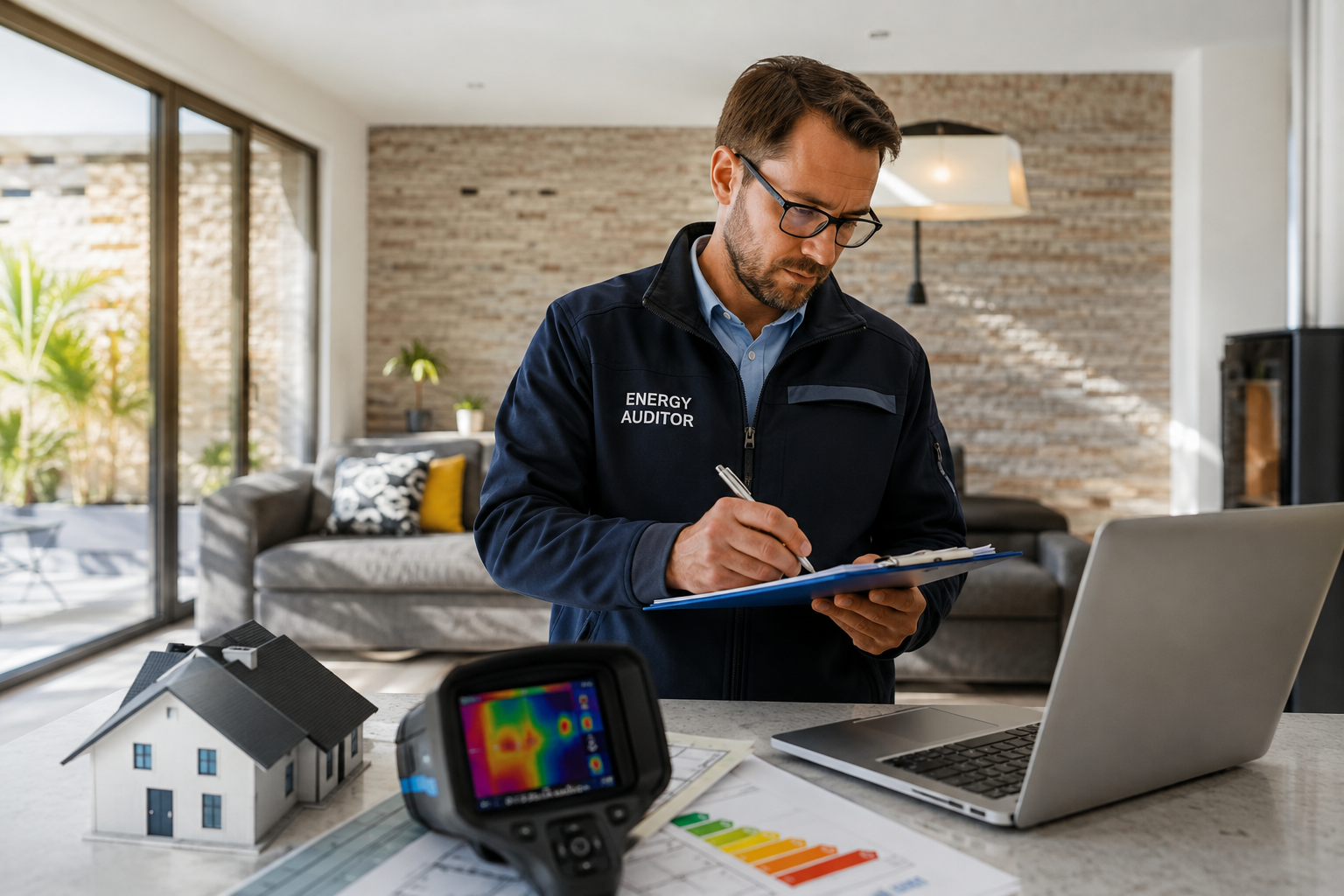
What Happens During an Energy Efficiency Inspection?
A qualified technician visits the property and evaluates multiple factors.
The inspection typically includes:
Building Envelope Assessment
Inspection of:
- Exterior walls
- Roof structures
- Floors
- Insulation systems
Window and Door Analysis
The technician examines:
- Window types
- Double glazing
- Frame materials
- Air leakage points
Heating and Cooling Systems
Evaluation of:
- Air conditioning units
- Heating systems
- Boilers
- Heat pumps
Renewable Energy Features
Assessment of:
- Solar panels
- Solar water heating systems
- Other renewable technologies
How Long Is an Energy Efficiency Certificate Valid?
In most cases, an Energy Efficiency Certificate remains valid for up to 10 years.
However, significant renovations may justify obtaining a new certificate earlier, especially if improvements increase the property’s rating.
Examples include:
- New insulation
- Window replacement
- Solar panel installation
- Air conditioning upgrades
- Roof improvements
Common Problems Found During Energy Assessments
Many properties in Costa Blanca share similar energy efficiency issues.
These often include:
Insufficient Insulation
Older homes frequently allow excessive heat transfer through walls and roofs.
Single-Glazed Windows
Older windows contribute significantly to energy loss.
Inefficient Cooling Systems
Outdated air conditioning units consume more electricity while providing less comfort.
Air Leakage
Poor seals around windows and doors can substantially increase cooling and heating demands.
How an Energy Assessment Supports Property Inspections
An Energy Efficiency Certificate provides valuable information, but it should not replace a comprehensive property inspection.
Combining both services gives property owners and buyers a much clearer understanding of a property’s condition.
A professional property inspection can identify:
- Structural defects
- Moisture intrusion
- Roofing issues
- Electrical concerns
- Plumbing defects
- Construction quality problems
Together, these assessments provide a more complete picture of the property’s current condition and future operating costs.
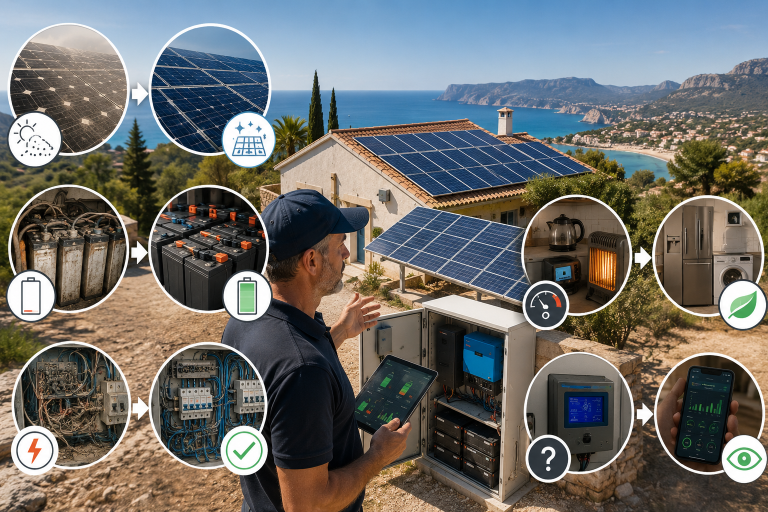
Can Solar Panels Improve an Energy Rating?
Absolutely.
Solar installations often contribute positively to a property’s energy performance.
Benefits may include:
- Lower electricity consumption
- Reduced carbon emissions
- Improved EPC rating
- Increased property value
- Greater buyer appeal
For many Costa Blanca homeowners, solar energy represents one of the most effective ways to improve energy efficiency.
Energy Efficiency Certificate in Costa Blanca
Costa Blanca’s climate creates unique opportunities and challenges for energy efficiency.
Properties benefit from:
- High solar potential
- Mild winters
- Strong renewable energy opportunities
At the same time, summer cooling demands can significantly impact energy consumption.
A professional energy assessment helps property owners understand where efficiency improvements can generate the greatest savings.
Frequently Asked Questions
How much does an Energy Efficiency Certificate cost in Spain?
Costs vary depending on property size, location, and complexity, but most residential properties fall within a relatively affordable range.
Can I sell my property without an Energy Efficiency Certificate?
Generally, no. A valid certificate is normally required during the sales process.
Who can issue an Energy Efficiency Certificate?
Only qualified and authorized technicians can legally perform the assessment and issue the certificate.
Does a higher rating increase property value?
In many cases, yes. Energy-efficient properties are increasingly attractive to buyers and tenants.
Can renovations improve my rating?
Yes. Upgrades such as insulation, double glazing, efficient air conditioning systems, and solar panels can significantly improve performance.
Need an Energy Efficiency Assessment in Costa Blanca?
Whether you are selling, renting, buying, or investing in property, an Energy Efficiency Certificate provides essential information about energy consumption, operating costs, and future improvement opportunities.
Combined with a professional property inspection, it helps property owners make informed decisions, avoid costly surprises, and maximize the value of their investment.
 79
79
 35
35
 20
20