A Real Story Every Property Buyer in Spain Should Read
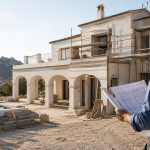
Imagine finding what appears to be the perfect property on the Costa Blanca.
The location is excellent.
The price seems fair.
The photos look fantastic.
The estate agent assures you everything is in order.
Excited about securing the property before another buyer does, you sign the Arras Contract and transfer a 10% deposit.
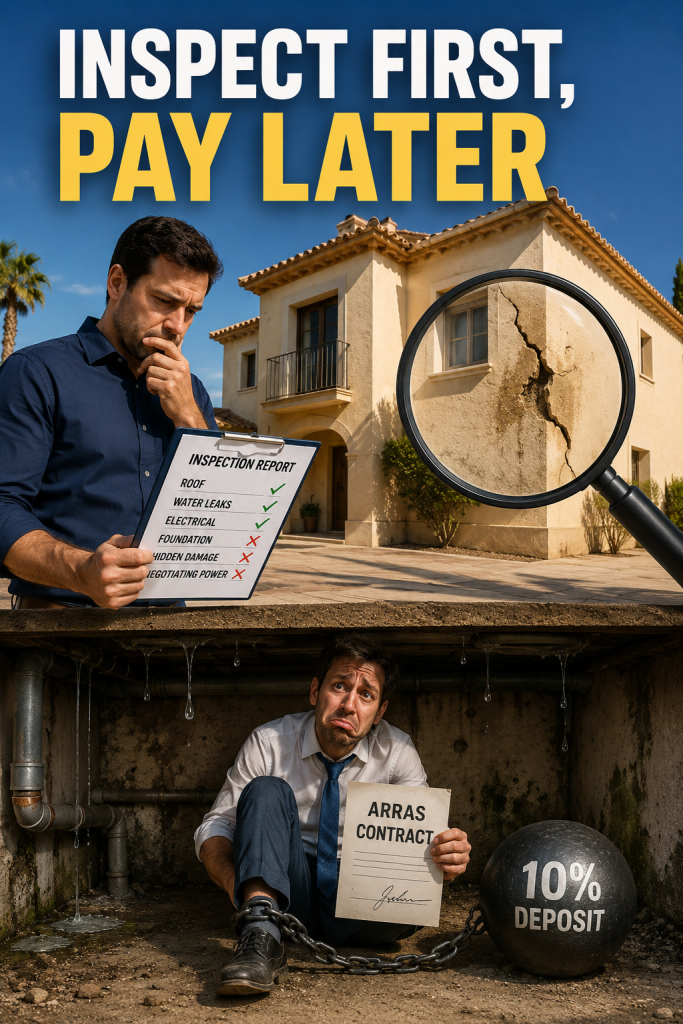
Only afterwards do you start wondering:
- What if there are hidden defects?
- What if there are damp problems?
- What if the roof leaks?
- What if the air conditioning, plumbing, or electrical systems have serious issues?
- What if the house needs €10,000–€20,000 in repairs?
Unfortunately, by then, your negotiating power may already be gone.
This is exactly what recently happened to a buyer who contacted us regarding a property inspection in Spain.
And it is a mistake that thousands of foreign buyers make every year.
The Story: A Buyer Who Called Too Late
A prospective buyer contacted us to arrange a professional pre-purchase property inspection for a quad house in Orihuela Costa.
At first glance, the situation looked routine.
However, during our initial discussion, several concerns emerged.
The property had been unoccupied for approximately four years.
The buyer had noticed:
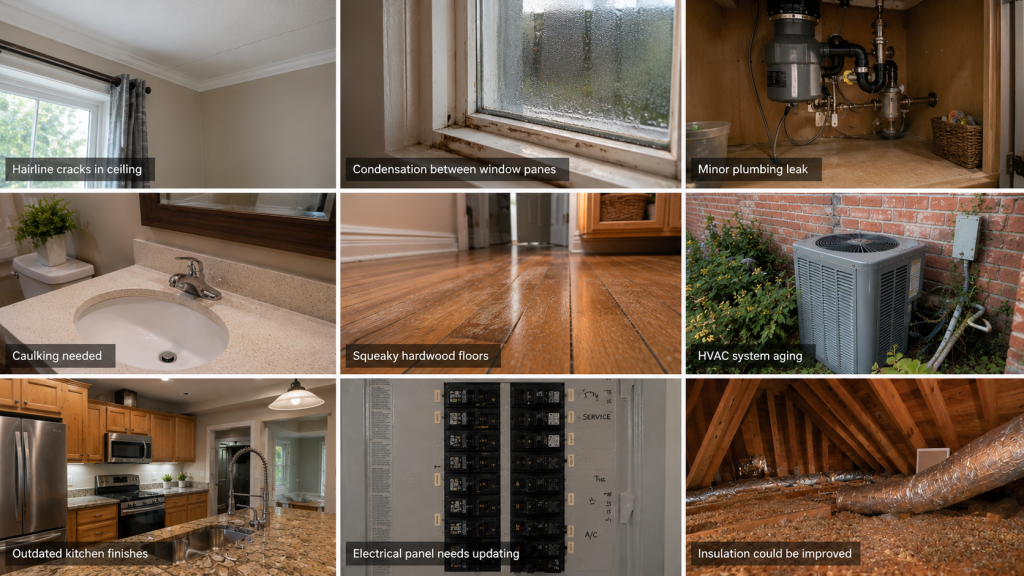
- Brown stains on interior walls
- Cracks in one of the bedrooms
- Potential concerns regarding the roof terrace (solarium)
- Questions about water pressure
- Concerns about the air conditioning system
- Uncertainty regarding the water heater and plumbing
All of these are valid reasons to conduct a thorough technical inspection.
Properties that have remained vacant for extended periods can develop hidden problems that are not immediately visible during a standard viewing.
Everything seemed perfectly timed for a detailed inspection.
Then we asked one important question.
“Have you already signed the Arras Contract?”
The answer changed everything.
The buyer had already signed the contract and transferred a deposit of approximately €5,000.
At that moment, the dynamics of the transaction changed completely.
Why Signing an Arras Contract Changes Everything
In Spain, the Arras Contract is often used to reserve a property before completion.
Once signed, the buyer usually commits to purchasing the property under the agreed conditions.
In many cases, if the buyer withdraws from the purchase without a contractual justification, the deposit may be lost.
This means that after signing the Arras Contract:
- The seller has significantly less incentive to negotiate.
- The buyer loses much of their leverage.
- Discovering defects becomes less useful as a negotiating tool.
- Walking away may become financially painful.
The inspection may still be valuable for understanding future repair costs, but its ability to influence the purchase price is dramatically reduced.
The Hidden Cost of Delaying a Property Inspection
Many buyers believe a property inspection is simply about identifying defects.
That is only part of its purpose.
A professional inspection provides information that can directly affect the purchase decision.
For example, an inspection may reveal:
Moisture and Damp Problems
Brown wall stains may indicate:
- Roof leaks
- Failed waterproofing
- Rising damp
- Condensation issues
- Plumbing leaks
The source of the moisture is often more important than the visible stain itself.
Structural Cracks
Not all cracks are serious.
Some are cosmetic.
Others may indicate movement, settlement, or water-related deterioration.
Without professional assessment, it is difficult to know the difference.
Roof Terrace Problems
On the Costa Blanca, roof terraces and solariums are among the most common sources of water ingress.
Repairing waterproofing systems can cost thousands of euros.
Plumbing and Water Systems
Properties left vacant for years may develop:
- Pipe leaks
- Damaged seals
- Corroded valves
- Blockages
- Water pressure issues
Air Conditioning and Electrical Systems
Long periods without use can lead to:
- Refrigerant leaks
- Failed compressors
- Electrical faults
- Corrosion-related issues
All of these findings can influence negotiations—if discovered before commitments are made.
Why Sellers Rarely Reduce the Price After Receiving a Deposit
Many buyers assume that if an inspection discovers problems, the seller will naturally reduce the price.
In reality, once a deposit has been paid, the seller often sees the situation differently.
The seller knows:
- The buyer is emotionally invested.
- The buyer has already committed funds.
- Walking away may be difficult.
- Finding another property means starting the process again.
As a result, the seller may simply refuse to renegotiate.
This is exactly why timing matters.
An inspection performed before signing creates leverage.
An inspection performed afterwards often creates frustration.
The Smart Order for Buying Property in Spain
The safest process is remarkably simple.
Step 1
View the property.
Step 2
Review available legal documentation.
Step 3
Arrange an independent property inspection.
Step 4
Analyze the findings.
Step 5
Negotiate repairs or price reductions if necessary.
Step 6
Decide whether to proceed.
Step 7
Sign the Arras Contract only after understanding the property’s true condition.
Following this sequence dramatically reduces risk and improves decision-making.
How Much Can a Property Inspection Save?
The answer varies.
Sometimes an inspection confirms that the property is in excellent condition.
That alone provides peace of mind.
In other cases, inspections reveal issues that can support negotiations worth:
- €2,000
- €5,000
- €10,000
- €20,000 or more
Occasionally, they help buyers avoid properties that would become expensive mistakes.
Compared to the cost of purchasing a home, a professional inspection is one of the smallest investments with the greatest potential return.
The Real Lesson
The most important lesson from this story is not about cracks, damp, roofs, or plumbing.
It is about timing.
The buyer did not make a mistake because they wanted an inspection.
They made a mistake because they wanted it after making a financial commitment.
Once the Arras Contract was signed and the deposit transferred, their strongest negotiating position had already disappeared.
The property may still turn out to be a good purchase.
Or it may not.
But the opportunity to make that decision with maximum leverage was lost.
Conclusion: Inspect First, Sign Later
If you are buying property in Spain, remember one simple rule:
Inspect first. Commit later.
A property inspection is not merely a technical exercise. It is a decision-making tool. It helps you understand risks, negotiate effectively, and avoid expensive surprises.
The best time to discover a problem is before you sign. The best time to negotiate is before you pay.
And the best time to walk away is before you become financially committed. That is how smart property buyers protect their investment in Spain.
Frequently Asked Questions
Should I get a property inspection before signing an Arras Contract in Spain?
Yes. A professional inspection should ideally be completed before signing the Arras Contract and paying a significant deposit.
Can I negotiate the price after a property inspection?
Yes, but negotiations are generally more effective before signing the Arras Contract.
What does a property inspection in Spain include?
Typically, it includes assessment of structure, moisture, roofing, plumbing, electrical systems, visible defects, and overall property condition.
Is a property inspection worth it in Spain?
For most buyers, yes. The cost of an inspection is usually small compared to the financial risks of purchasing a property with hidden defects.
What are the most common hidden defects in Spanish properties?
Dampness, roof leaks, waterproofing failures, structural cracks, plumbing issues, and defects resulting from long periods of vacancy.
 79
79
 35
35
 20
20